Over the course of your dog training journey, you may find that relying on clever techniques might seem appealing, but consistency is what truly fosters strong communication between you and your canine companion. Consistent commands, routines, and reinforcement lead to better understanding and lasting behavioral results. Embracing a systematic approach not only enhances trust but also ensures your dog remains engaged, reducing confusion and frustration. By prioritizing consistency over cleverness, you create a stable environment where your dog can flourish.
Key Takeaways:
- Consistent commands and cues help dogs understand expectations, leading to quicker learning and better behavior.
- Frequent practice reinforces learned behaviors, creating reliable responses in various situations.
- Consistency fosters a strong bond between trainer and dog, enhancing trust and engagement in the training process.
Understanding Dog Training
The Importance of Consistency
In the matter of dog training, consistency is your greatest ally. You need to establish clear rules and guidelines that you adhere to every time, regardless of the situation. Dogs thrive on routine; repeating commands and cues helps reinforce their learning. For instance, if you allow your dog to jump on you one day but scold them for it the next, the mixed signals can lead to confusion, making effective training nearly impossible.
Furthermore, consistency extends beyond commands; it also involves the timing of rewards and corrections. If your dog performs a desired behavior, providing immediate feedback, whether it’s praise or a treat, strengthens the association between the behavior and the reward. Over time, your dog learns to expect the same response for specific actions, solidifying positive behavior.
The Role of Cleverness in Training
Cleverness in dog training can manifest in creative methods or unique tricks, but too often, it overshadows the fundamental necessity of consistency. While clever techniques might temporarily capture a dog’s attention, they can’t replace the reliability that consistent training offers. A clever method may involve using complex commands or advanced tricks, which can be counterproductive if your dog hasn’t mastered basic obedience skills first.
Additionally, relying solely on clever strategies can set you up for frustration and setbacks. You might find yourself constantly changing tactics in search of that effective method. Instead, focusing on a consistent training regime will yield better long-term results, allowing even the most simple commands to stick with your dog.
Common Myths About Dog Training
Many myths surround dog training that can derail your efforts and understanding. One common misconception is that dogs train themselves through observation. While it’s true that dogs learn from their surroundings, effective training requires your active involvement and leadership. Another myth is that dogs can only be trained when they are puppies; in reality, dogs of all ages can learn new behaviors with the right approach. This opens the door for many dog owners to reconsider training strategies and understand that age is not a barrier.
Some might believe that punishment is an effective training tool, but this can lead to fear, anxiety, and mistrust. Positive reinforcement techniques prove far more efficient, helping you build a trusting relationship with your dog. Shifting your mindset from punishment to reward-based training nurtures a more obedient and happy pet.
Key Factors in Successful Dog Training
- Consistency in commands and rewards
- Timing and reinforcement
- Clear communication with your dog
- Setting realistic expectations
In the matter of dog training, timing and reinforcement are fundamental elements that shape your dog’s understanding of expectations. Delivering rewards immediately after your dog performs the desired behavior ensures that they associate the action with the positive consequence. For example, if you wait too long to reward a sit command, your dog may confuse it with an entirely different action. Aim for a delay of no more than a few seconds to maximize effectiveness.
Incorporating a variety of reinforcements can keep your dog engaged. Some dogs respond well to treats, while others may be more motivated by praise or playtime. Experiment with different rewards to discover what works best for your dog. The key is maintaining a consistent delivery; abrupt changes in reward types can lead to confusion and hinder progress.
Clear Communication
Clear communication is vital in successfully training your dog. Inconsistent cues can lead to misunderstandings, so use the same words and gestures for specific commands every time. For instance, if you use “sit,” ensure that you never substitute it with “sit down.” Your dog thrives on clarity, so keeping your commands uniform allows for easier learning.
Body language also plays a significant role in communication. Ensure your posture, facial expressions, and tone of voice match the message you’re conveying. If you’re stern when giving a command, maintain that seriousness in your tone, while adopting a cheerful demeanor when you’re rewarding good behavior. This alignment helps your dog grasp what you expect from them.
Additionally, consider the environment when training. Distractions can compromise your dog’s ability to respond to commands clearly. Choosing a quiet space initially can help reinforce the learning process before introducing distractions gradually. This controlled approach strengthens communication links, making your dog more responsive in various settings.
Setting Realistic Expectations
Setting realistic expectations is important for both you and your dog. Each dog has its own learning pace; some may grasp commands quickly while others take longer to understand. It’s vital to recognize that factors such as age, breed, and past experiences can influence your dog’s ability to learn. Be patient and adjust your training pace according to your dog’s responses, avoiding frustration that could impede progress.
Focus on achievable goals. Instead of expecting flawless obedience in a short amount of time, break your training into manageable steps. For example, teach “sit” reliably before moving on to “stay.” Incremental successes help build confidence and reinforce a positive training experience, allowing your dog to thrive within their individual capabilities.
How-to Maintain Consistency in Training
Establishing a Training Routine
To strengthen your dog’s learning experience, establish a consistent training routine. Choose specific times during the day for training sessions, ideally when your dog is most alert, such as in the morning or just before feeding. Short, frequent sessions—around 5 to 10 minutes—are often more effective than longer, sporadic ones. A consistent schedule aids your dog’s understanding of when to expect training, which enhances focus and retention.
Incorporate training into daily activities rather than viewing it as a separate task. For instance, practice commands while on walks or during playtime. This not only reinforces your dog’s learning but also strengthens your bond by integrating training into enjoyable experiences.
Using Consistent Commands
Consistency in verbal commands is vital for effective training. Whenever you give a command, use the same words or phrases without deviation. For example, if you choose “sit” as the command, don’t mix it with other variations like “sit down” or “sittin’.” This clarity in communication minimizes confusion for your dog, enabling quicker comprehension and response.
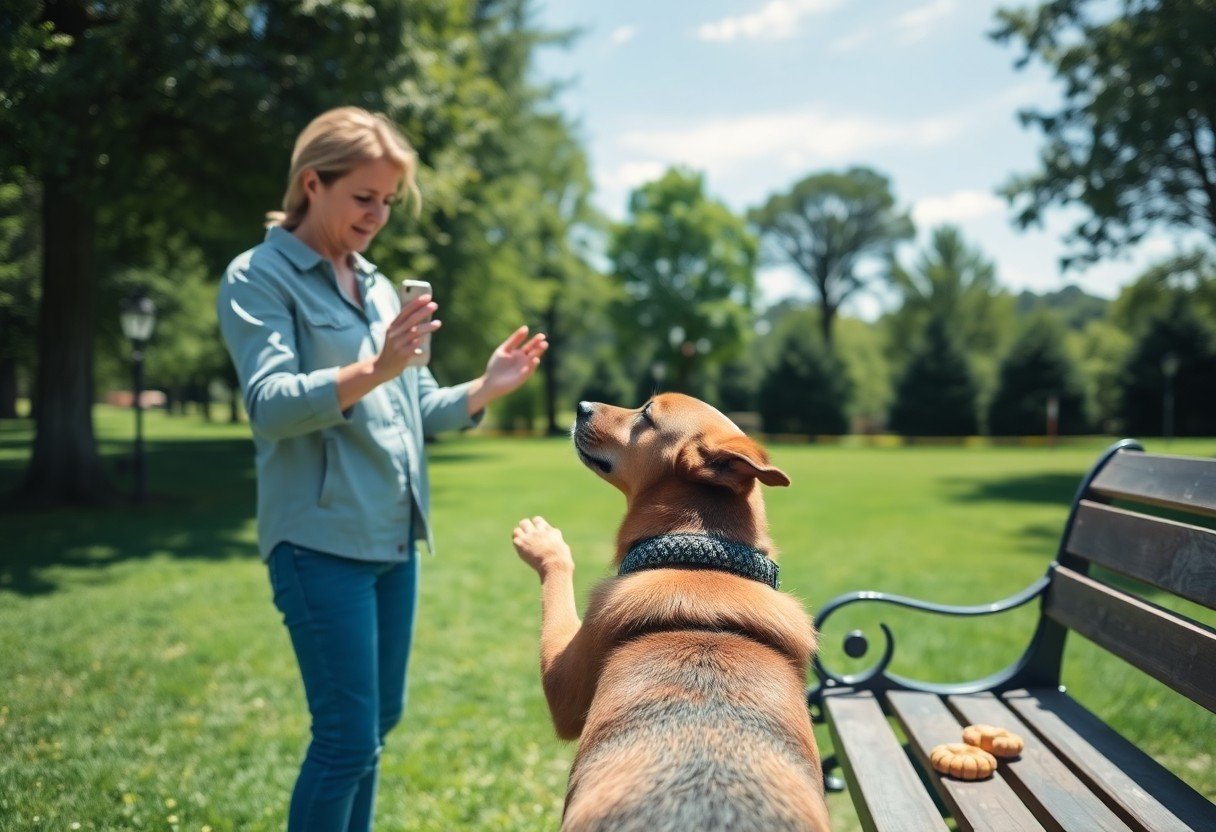
Also, integrating hand signals along with verbal commands can double the effectiveness of your training. Dogs respond well to visual cues, so pairing a clear hand gesture with your spoken command allows for reinforcement through multiple channels. This approach supports dogs with different learning styles and enhances their ability to associate actions with commands.
Maintaining consistent commands fosters a strong understanding between you and your dog. When you consistently use the same words and gestures, your dog learns to associate them with actions and behaviors more rapidly, removing ambiguity that can hinder training progress.
Rewards and Discipline
In the matter of rewards, ensure that they are immediate and directly linked to the behavior you wish to reinforce. For example, if your dog sits on command, offer praise or a treat right after they comply to strengthen that connection. Using a mix of positive reinforcement—like treats, praise, and play—will motivate your dog to repeat desired behaviors. Equally important is the consistent application of discipline. When your dog exhibits behavior that requires correction, such as jumping or barking excessively, be clear and firm without using harsh punishment. Instead, redirect them to a more appropriate behavior while ensuring they understand the disapproval.
Establishing a structured system of rewards and discipline keeps your dog focused on learning. The predictability ensures your dog knows what to expect, which ultimately leads to a more confident and obedient pet.
Tips for Effective Dog Training
- Be consistent with commands and routines.
- Utilize positive reinforcement techniques.
- Engage in activities to keep your dog motivated.
- Tailor your approach to your dog’s personality.
- Regularly evaluate training progress.
Positive Reinforcement Techniques
Implementing positive reinforcement techniques is one of the most effective methods for training your dog. This approach involves rewarding your pet with treats, praise, or playtime for exhibiting desired behaviors. For example, if your dog sits when you ask, provide a favorite treat immediately to reinforce that behavior. The key is to reward promptly, as this helps your dog make the connection between their action and the reward.
Incorporating a variety of rewards can also enhance your training sessions. Dogs can become bored if they receive the same treat repeatedly; therefore, you might want to mix in different types of foods or toys. Using a hierarchy of rewards, starting with the highest value items and gradually moving to lower ones as the behavior becomes more habitual, can keep your dog engaged and motivated.
Engaging Activities to Keep Dogs Motivated
Engaging activities like agility training, fetch, or hide-and-seek not only make learning fun but also keep your dog’s energy focused. These activities can break up training routines and offer mental stimulation, which is especially beneficial for high-energy breeds. By incorporating games that require both physical and mental effort, you can create a more dynamic training environment. For example, a balance between structured activities and free playtime can keep your dog enthusiastic about training sessions.
Engaging activities can also include puzzle toys that challenge your dog’s problem-solving skills, ensuring they are consistently mentally stimulated. When your dog successfully solves a challenge, the satisfaction they gain can motivate them to participate in training even more.
Tailoring the Approach to Your Dog’s Personality
Understanding your dog’s unique personality is imperative for effective training. If your dog is more timid, using gentle encouragement and gradual exposure to new tasks can help build their confidence. Conversely, a more dominant or energetic dog may require clear boundaries and structured routines to ensure they remain focused during training. Adapting your techniques based on your dog’s temperament can lead to more productive training sessions.
By observing your dog’s reactions to different methods, you can refine your approach to fit their style. For instance, if a specific training method seems to overwhelm your dog, it may indicate the need for a softer strategy or slower pace in teaching. Tailoring your training not only enhances your dog’s learning experience but also strengthens the bond between you and your pet. Knowing your dog’s personality can make training an enjoyable journey for both you and your furry friend.
Troubleshooting Training Issues
Identifying the Problem Behavior
When facing challenges in your dog training, the first step is to accurately identify the problem behavior. This might include anything from excessive barking to jumping on guests. Observe your dog in various situations to pinpoint when the behavior occurs. Take note of the triggers, whether they involve specific scenarios or environmental factors. For instance, if your dog barks when the doorbell rings, try to recognize the intensity and context of the response.
Additionally, consider the frequency of the behavior. Tracking how often it happens can provide insights into whether it’s a sporadic issue or a more ingrained habit. By taking notes, you’ll develop a clearer understanding of your dog’s actions, allowing you to approach the behavior with targeted strategies rather than generalized solutions.
Adjusting Training Techniques
If you’re facing persistent issues, it may be time to adjust your training techniques. Not every method works for every dog, and certain techniques might not resonate with your pet as you intended. For example, if a particular reward isn’t motivating enough, you might want to experiment with different types of treats or toys. Alternatively, if your training sessions seem ineffective, consider varying the duration and frequency. Shorter, more frequent sessions can sometimes lead to better results.
Also, evaluate your command clarity. Ensure that the cues you use are distinct and consistent, which can make a significant difference. If your dog is responding inconsistently, it may be because they’re confused by your commands or signals. Reassessing how you communicate can streamline the learning process and enhance overall responsiveness.
Adjusting your training strategy may require a willingness to try new approaches. Utilizing positive reinforcement, for instance, can shift a dog’s understanding of expectations. You can opt for more engaging activities, like interactive toys or puzzle games, which can transform training into a fun experience, strengthening your bond at the same time.
Staying Patient Through the Process
Training a dog is not always a straight path; it often involves ups and downs. Staying patient is vital. Frustration can cloud your judgment and lead to inconsistency, which might hinder progress. When you maintain a calm demeanor, your dog can sense your energy, making them more receptive to learning. If you find your patience waning, take a step back and regroup. Remember that every dog learns at their own pace, and growing frustrated can negatively impact your training journey.
Your dog may test boundaries, but this is a natural part of their learning curve. Embrace the process; as you practice patience and consistency, the breakthroughs will become increasingly frequent. Celebrate the small victories, as they contribute to your dog’s overall progress and reinforce your commitment to effective training.
Evaluating Progress in Dog Training
Setting Milestones
Establishing clear milestones is important for measuring your dog’s progress. These milestones should be achievable and specific, such as walking on a loose leash for five consecutive minutes or responding to a sit command in a distracting environment. By breaking down training objectives into smaller, manageable goals, you set a foundation for gradual learning and development. For example, if you’re working on recall, initially aim for success when your dog is in a low-distraction area before gradually increasing the difficulty.
Documenting these milestones can provide you with visual confirmation of progress. Consider maintaining a training journal where you track achievements. This not only helps you stay organized but also motivates you by showing how far you and your dog have come together.
Regular Assessment of Behavior
Continuously evaluating your dog’s behavior is key to understanding their learning process better. This means taking note of how consistently your dog responds to commands in different environments and during various situations. Regular assessments might involve weekly training sessions where you observe how quickly your dog catches on to new commands or how well they maintain previously learned behaviors. If your dog starts to show resistance or confusion, it’s a sign that adjustments may need to be made.
Keep in mind that fluctuations in behavior can occur due to a range of factors, including changes in environment, distractions, or even your dog’s health. By noting these variations, you can pinpoint patterns that require your attention. Use these insights to celebrate achievements and identify areas in need of improvement. This ongoing evaluation gives you a clearer picture of your dog’s journey and keeps you connected to their emotional and mental state.
Adapting Training Strategies as Needed
As you assess your dog’s behavior regularly, you may find that certain techniques are not yielding the desired results. This is the perfect time to adapt your training strategies. For instance, if your dog struggles with a specific command, consider changing your approach. You might try a different method, like incorporating positive reinforcement with treats or toys, or simplifying the command to build confidence. These adjustments ensure that your training remains effective and keeps your dog engaged.
Flexibility in your training methodology allows you to cater to your dog’s unique learning style. Some dogs thrive on structured training, while others may excel with more freestyle methods. Observe your dog’s reactions and adjust accordingly; this personal touch not only aids learning but also strengthens the bond between you and your canine companion.
Final Words
Summing up, consistency in dog training establishes clear communication between you and your dog. By implementing the same commands, rewards, and corrections consistently, you create a predictable environment that helps your dog understand what is expected of them. This predictability aids in building trust and enhances your ability to train effectively over time, allowing your dog to learn faster and more reliably.
While clever techniques and quick fixes may seem appealing, they often lead to confusion and inconsistency in your dog’s training. Focus on consistent practices that reinforce desired behaviors rather than relying on novelty or gimmicks. Your commitment to a structured training regimen will yield better long-term results and deepen the bond you share with your dog, ultimately leading to a well-behaved and happy companion.
FAQ
Q: Why is consistency important in dog training?
A: Consistency helps dogs understand what is expected of them. When commands and rules remain the same, dogs are better able to learn behaviors and respond correctly. Inconsistent training can lead to confusion, making it harder for dogs to grasp the desired actions or commands.
Q: How does cleverness differ from consistency in training methods?
A: Cleverness in training can involve using various tricks or unique approaches to teach a dog. However, while clever techniques may engage a dog’s interest, they can also create inconsistencies. Consistency establishes clear patterns and routines, which are more effective for long-term learning and behavior reinforcement.
Q: What are the benefits of being consistent in training sessions?
A: Consistent training sessions can lead to quicker learning, improved behavior retention, and stronger bond between the dog and handler. It also fosters a sense of security for the dog, as they know what to expect during training, reducing anxiety and frustration.